
Fieldwork
You’ve received a new dataset. It has dozens of columns, repeated records, and gaps you don’t yet understand. Before choosing what to count or compare, you need to work out what each row represents and how the pieces fit together.
Fieldwork is a Python toolkit that helps researchers find their bearings in pandas dataframes. Discover the structure of a table, follow surprising patterns back to individual records, and decide what to explore next.
See how the table fits together
Section titled “See how the table fits together”A laboratory export can mix information about people, samples, instruments, and measurements in a single table. Starting with identifiers such as participant and specimen IDs, Fieldwork builds a map of the relationships in the records. Here, 960 rows and 43 columns become a picture you can use to plan your analysis.
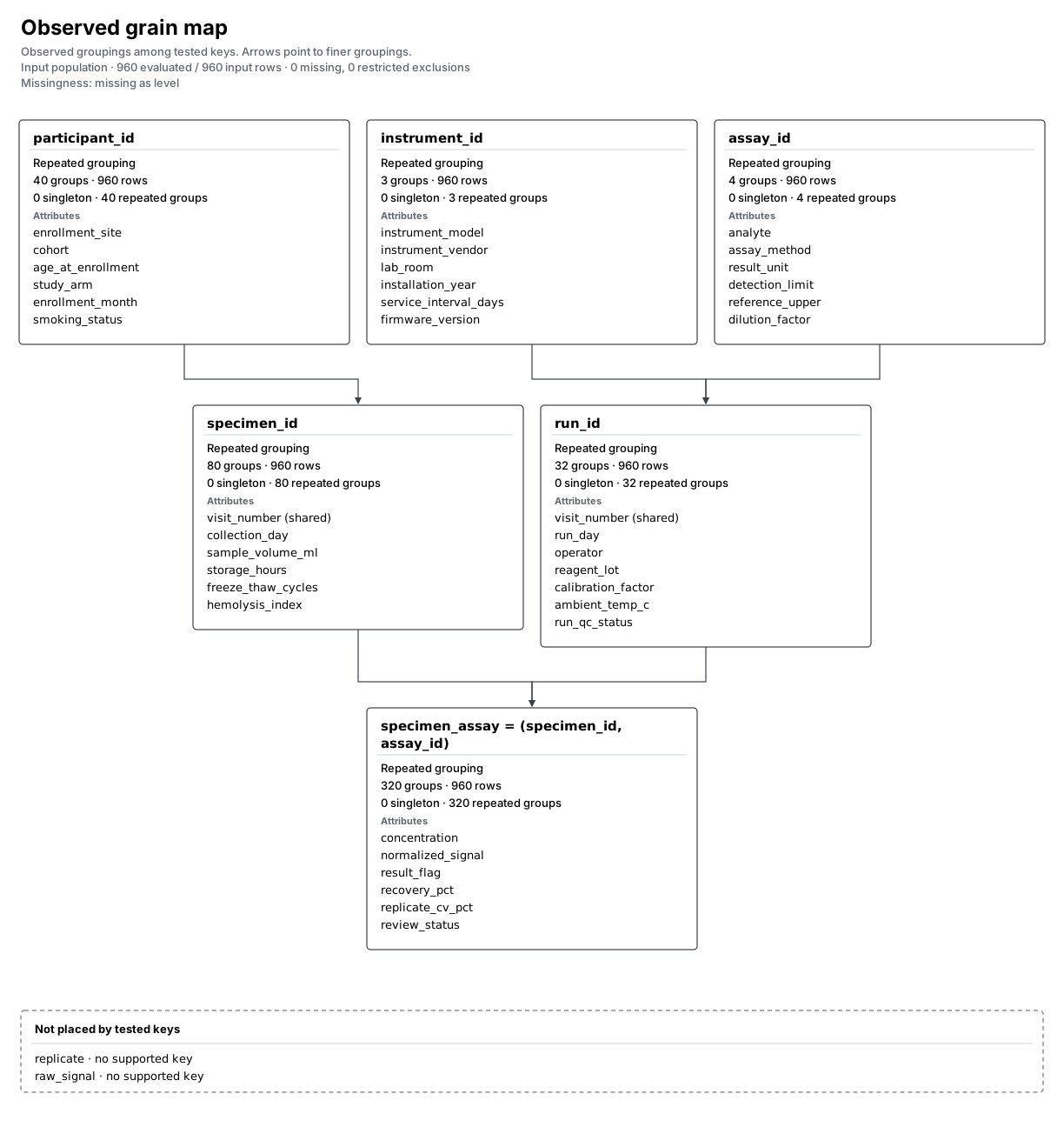
You can see how one person contributes several samples and how those samples connect to laboratory runs. That helps you choose how to group the data and understand what you’re counting before you summarize the results.
Explore this map or try the example yourself with the included synthetic data.
Follow the questions that emerge
Section titled “Follow the questions that emerge”Once you have a sense of the table, you can follow what catches your attention. A group of fields that is always filled in together might point to a shared collection process. An unexpected gap might lead you to a particular site or a handful of records that need a closer look.
Fieldwork lets you move from those patterns to the rows behind them, then focus on the part of the data you want to understand. When a second export arrives, you can check whether its identifiers connect to the first and whether shared details agree. You can share what you’ve found and save your investigation to revisit when the next delivery arrives.
Start with your own data
Section titled “Start with your own data”The first investigation takes you from a pandas dataframe to a useful overview and the records behind a finding. As new questions emerge, the guides help you explore further, and the API reference covers the available options.